
Tapflare Article
How Long Does It Take to Build a Website? Realistic Timelines
Summary
- 01A standard small-to-mid-size business website typically falls in a 4-to-16-week planning range, though half of surveyed firms favor 4 to 8 weeks for a mid-sized site.
- 02Ecommerce builds commonly span 8 to 28 weeks, with basic Shopify stores live in 1 to 2 weeks and enterprise Shopify Plus deployments taking 3 to 6 months.
- 03Enterprise migrations vary widely: Adobe rates a high-complexity migration at 12 to 24 months, while BigCommerce reports enterprise customers launching in four months or less on average.
- 04Platform choice matters less than scope: WordPress, Webflow, and Shopify each span timelines from hours to a year depending on how much custom engineering is layered on top of the base platform.
- 05Eight named case studies span a documented range of 10 days to 6 months, from Verifone's 10-day page rebuild to POLIMI's six-month digital transformation.
- 06Content readiness, stakeholder responsiveness, and custom back-end integrations are the factors most commonly cited as accelerating or delaying a website project's timeline.
Inside this article
- 01Executive Summary
- 02Introduction and Background
- 03Website Types and Complexity: How Timeline Scales with Scope
- 04The Website Development Lifecycle: Stage-by-Stage Timelines
- 05Platform and Team Choice: WordPress, Webflow, Shopify, and Enterprise CMS Timelines
- 06Factors That Accelerate or Delay a Website Project
- 07How Long Does It Take to Build an Ecommerce Website?
- 08Building a Realistic Website Project Timeline Template
- 09Data Analysis and Evidence
- 10Case Studies and Real-World Examples
- 11Implications and Future Directions
- 12Frequently Asked Questions (FAQs)
- 13Conclusion
How Long Does It Take to Build a Website? Realistic Timelines
Executive Summary
Available data suggest there is no single correct answer to how long a website takes to build, only a range that depends on scope, platform, and team. Wix's own guidance states that building a website can take anywhere from "days to weeks" for a do-it-yourself (DIY) builder up to "one to six months for fully custom websites with advanced functionality" [1]. Shopify's own build-timeline guidance similarly frames the range as "between one week and five months," depending on complexity [2], while Webflow demonstrates a template-based build in "3 hours, or less" at the fast extreme [3].
For a standard, professionally built small-to-mid-size business website, a 4-to-16-week planning range is a directional estimate, not a market-wide benchmark. In GoodFirms' 2026 survey of 300-plus web development firms across 31 countries, half of respondents selected 4 to 8 weeks for a mid-sized website and 32% selected 8 to 16 weeks [4]. These are self-reported estimates from surveyed firms, not observed delivery times or a representative census of all website projects. An earlier GoodFirms survey of agencies and freelancers found an average professional turnaround of roughly two months [5]. Clutch's 2025 survey of 406 U.S. small business owners found that 83% now have a website, up from 64% in 2018, and that 45% of those who built one outsourced the project to an agency [6].
Ecommerce sites typically run longer, commonly landing in an 8-to-28-week window as detailed in the Ecommerce section below, consistent with platform-specific Shopify data showing basic stores at 1 to 2 weeks and enterprise Shopify Plus implementations at 3 to 6 months [7]. Enterprise and heavily custom builds extend furthest: Adobe's own Commerce migration documentation rates a "High" complexity migration at 12 to 24 months [8], while BigCommerce reports its enterprise customers "on average, launch in four months or less" using its dedicated launch services [9].
Platform choice matters less than most buyers assume. WordPress, which powers 41.2% of all websites tracked by W3Techs as of July 31, 2026 [10], and Shopify, the largest ecommerce platform among the top one million sites by traffic rank tracked by BuiltWith [11], both span timelines from hours to a year depending on how much custom engineering a project layers on top of the base platform. Eight named, real-world cases examined in this report illustrate a documented case-study range of 10 days to 6 months: payments company Verifone rebuilt five pages across 32 global locales in 10 days with Webflow partner BX Studio [12], fashion brand J.Lindeberg replatformed its ecommerce site to Shopify Plus in 16 weeks under a hard four-month deadline [13], and business school POLIMI completed a full Sitecore-based digital transformation in six months [14].
A recurring practitioner observation is that content readiness can materially affect whether a project meets its estimate. Project-management vendor Asana's own web design template frames a typical mid-sized redesign at 16 to 22 weeks from discovery to launch [15], and WordPress VIP's own migration guidance puts a same-platform enterprise migration at 5 to 12 weeks, versus 9 to 20-plus weeks for a full cross-CMS rebuild [16]. Finalizing copy, imagery, and product data before a build begins can reduce a potential source of delay; the sources cited here do not establish content readiness as the leading cause across all website projects.
Introduction and Background
The question "how long does it take to build a website" has no single answer, and any source that gives you one number without asking about scope first is oversimplifying. Published examples range from hours for a template-based Webflow build to more than a year for a high-complexity enterprise commerce migration. Webflow's example is a tutorial for building a restaurant website from a portfolio template in three hours or less; it is not evidence of an AI-built or single-page timeline [17]. Wix's own guidance states that building a website can take anywhere from "days to weeks" for a do-it-yourself (DIY) builder up to "one to six months for fully custom websites with advanced functionality" [1]. Shopify's own build-timeline guidance similarly frames the range as "between one week and five months," depending on complexity [2].
This report organizes that broad range into a source-based planning framework. It draws on vendor documentation from Wix, Shopify, Webflow, Adobe Commerce, BigCommerce, WordPress VIP, and Sitecore; industry survey data from GoodFirms and Clutch; content management system (CMS) market-share tracking from W3Techs and BuiltWith; and named, disclosed-timeline case studies from real companies that built or rebuilt production websites. The goal is to give a founder, marketing lead, or product manager a realistic planning baseline: not a single number, but a framework for estimating a specific project's timeline based on its type, platform, team, and content readiness.
Three variables materially affect an estimate in this report: scope (how many pages, what custom functionality, whether the project is ecommerce), team (DIY builder, freelancer, agency, or enterprise implementation partner), and content readiness (whether copy, images, and product data are ready before design begins). Agency and vendor guidance frequently identifies unready content as a source of delay, but the cited sources do not establish it as the single most common cause across website projects. One agency guide states that "the number one reason website projects stall is a lack of prepared content" [18], and a separate agency's real-project log shows a client who chose to write their own copy adding a two-week delay to launch [19].
The sections that follow work through complexity tiers, the standard project lifecycle stage by stage, platform-specific timelines (WordPress, Webflow, Shopify, and enterprise CMS platforms, the factors that most reliably speed up or slow down a build, ecommerce-specific timelines, a practical project-timeline template, the quantitative survey data behind these estimates, and eight named, real-world examples with disclosed build durations ranging from a ten-day page refresh to a six-month digital transformation. Adobe separately estimates 12 to 24 months for a high-complexity migration from Adobe Commerce on Cloud Infrastructure or on-premises to Adobe Commerce as a Cloud Service.
Website Types and Complexity: How Timeline Scales with Scope
Every credible timeline estimate starts by classifying the site itself, since the gap between the fastest and slowest categories spans roughly three orders of magnitude, from an hour to more than a year.
At the fastest end, a template-based DIY builder can produce a live, simple site in a single sitting when content and search-engine-optimization (SEO) preparation are complete. Webflow's own blog demonstrates building "a well-crafted website in just 3 hours, or less" using a template [3]. A website-services overview similarly reports that DIY site builders average an estimated 10 to 20 hours of hands-on work, compared with 200+ hours for a custom build handled by a professional developer [20]. Theme-based WordPress builds fall in between, at roughly 20 to 40-plus hours, against 60 to 200-plus hours for a fully custom-designed site [21].
A simple brochure site, typically defined as five to fifteen pages with basic navigation, sits at the next tier. A UK-based agency reports a "realistic timeline" of four to eight weeks for this category (Source: bsmart.agency), and a separate agency's project log converges on a similar figure, putting a "standard website (5 to 8 pages)" at six to eight weeks from kickoff to launch [22].
Mid-size sites (roughly 15 to 50 pages, with more custom design and structured content) move into a wider ten-to-twenty-four-week range, per a web development agency's phase-summary table (Source: butterfly.com.au) and a separate design agency's twelve-to-twenty-four-week estimate for a "standard mid-sized redesign" [23].
Large-scale custom builds, defined as sites with bespoke functionality, complex integrations, or a custom web application layer rather than a content site, run substantially longer. Elementor characterizes anything requiring 6 to 12+ months as "no longer a website build" in the conventional sense, but a custom application [24]. A WordPress-focused development shop similarly reports that enterprise-level WordPress builds "potentially requiring 6-12 months for complete development and deployment" once multiple integrations and advanced security review are involved [25], and Shopify's own guidance separately confirms that "a complex, custom website with many pages and functionalities can take four months (or longer) to build" [26].
Table 1 summarizes indicative estimates from vendor documentation and agency guidance. These ranges are planning references, not independently validated industry benchmarks; the GoodFirms survey figures discussed later are survey results and should be interpreted separately.
Table 1: Indicative Website Timeline Estimates by Type and Complexity
| Site Type | DIY / Self-Built | Professional (Freelancer or Agency) | Representative Sources |
|---|---|---|---|
| Template-based single-page site | Up to 3 hours in Webflow’s example | Not typically applicable | Webflow [3] |
| Simple brochure site (1 to 5 pages) | 10 to 20 hours | 4 to 8 weeks | Network Solutions [21], BSMART (Source: bsmart.agency) |
| Small business site (5 to 15 pages) | 1 to 2 weeks | 4 to 8 weeks | Yellowball [22], Elementor [27] |
| Mid-size site (15 to 50 pages) | Rarely attempted DIY | 10 to 24 weeks | Butterfly (Source: butterfly.com.au), CliqueStudios [23] |
| Basic ecommerce store (Shopify, WooCommerce) | 3 to 6 weeks | 1 to 3 weeks (basic) to 8 to 16 weeks (advanced) | Network Solutions [28], Elementor [29] |
| Large custom build / web application | Not applicable | 6 to 12+ months | Elementor [24], White Label Coders [25] |
| Enterprise CMS migration | Not applicable | Varies by platform and migration scope; Adobe Commerce as a Cloud Service high-complexity migrations are estimated at 12 to 24 months | Adobe [8], Sitecore case study [30] |
As the table shows, the DIY-versus-professional gap narrows or even inverts at the smallest and largest ends of the spectrum: a simple site is faster built by hand with a template, while a large custom build has no meaningful DIY path at all. Reddit-sourced community sentiment (labeled here as sentiment, not measured data) corroborates the wide real-world spread: one professional designer reported quoting clients 60 days as a default but having delivered projects "from 3 days to 23 months depending on scope" [31].
The Website Development Lifecycle: Stage-by-Stage Timelines
Regardless of site size, most professionally managed website projects move through the same six to seven stages, and understanding how long each stage typically takes explains why total estimates vary so widely even for similarly scoped sites.
Discovery and strategy. The planning stage, covering goals, competitive research, and technical requirements, is estimated at one to four weeks by a development agency's phase-duration table (Source: butterfly.com.au), though a separate agency notes this can compress to as little as four working days "if the client has a clear offer" [32]. Shopify's own build-timeline guide allots a similar one to two weeks to the initial CMS-and-hosting selection phase before design work begins [33].
Information architecture and wireframing. Sitemap development and user-flow mapping is generally the shortest formal stage. Webflow's own process guidance describes this stage as "creating sitemaps and wireframes to help you and clients/stakeholders define your deliverables" before visual design begins [34].
Visual design. Translating wireframes into finished visual design, including a style guide and responsive layouts, is often one of the longer stages in agency estimates. Web design and development agency Sleepless Media estimates two to four weeks, noting that the exact figure depends on "the number of mockups, revisions" required [35]. This is directional agency guidance, not an independently validated benchmark.
Development. Front-end build, CMS configuration, back-end logic, and integrations make development the longest and widest-ranging stage. Shopify's own guidance puts it at four to ten weeks, calling it the longest individual phase of a typical build [36].
Content population. Loading and formatting final copy, images, and (for commerce sites) product data runs in parallel with development in well-run projects, but becomes the leading bottleneck when content is not ready in advance. Webflow-focused agency guidance concludes flatly that "late content derails more projects than technical issues ever could" [37], a theme explored further in the Factors section below.
Testing and quality assurance (QA). Cross-browser, cross-device, performance, and accessibility testing typically takes one to two weeks (Source: butterfly.com.au), though real-project logs show wide variance: one agency reported a six-day QA cycle for a complex build and under 48 hours for a simple portfolio site [38].
Launch. The technical cutover duration varies by implementation. Shopify Plus's own go-live documentation instructs merchants to finalize domain and DNS details "at least four weeks ahead of your desired go-live date" and to lower DNS time-to-live (TTL) settings "about 1 week before your go-live date." These are implementation-preparation steps, not evidence of a universal DNS-propagation buffer [39] [40].
Table 2 presents illustrative planning durations for a mid-scope professional project. Where a cited source describes an activity without establishing a duration, the table labels the duration as a planning assumption.
Table 2: Illustrative Stage-by-Stage Website Development Planning Timeline
| Stage | Typical Duration | What Happens |
|---|---|---|
| Discovery and strategy | 1 to 4 weeks | Goals, requirements, technical planning (see Discovery and Strategy above) |
| Information architecture / wireframing | 1 to 3 weeks (illustrative planning assumption) | Sitemap, navigation, user flows [34] |
| Visual design | 2 to 4 weeks | Brand application, style guide, responsive states [35] |
| Development | 4 to 10 weeks | Front-end build, CMS setup, integrations [36] |
| Content population | 1 to 2 weeks (parallel) | Copy, imagery, product data loaded [41] |
| Testing and QA | 2 days to 2 weeks | Cross-browser, accessibility, security, performance (see Testing and Quality Assurance above) |
| Launch | Cutover timing varies; schedule DNS preparation about 1 week before go-live | Cutover and DNS preparation [40] |
If run sequentially, the listed stages total roughly 10 to 25 weeks, including the one-week launch buffer; content population is shown separately because it commonly overlaps development. Development is usually the longest individual stage, but the other stages and delays can still materially affect the total timeline; a delay in any one can cascade through the remaining stages, which is why the following section focuses specifically on delay factors.
- 01Discovery and Strategy
Goals, competitive research, and technical requirements are scoped before design begins.
- 02Visual Design
Wireframes are translated into finished visual design, style guides, and responsive layouts.
- 03Development
Front-end build, CMS configuration, back-end logic, and integrations happen here, the longest stage.
- 04Content Population
Final copy, images, and product data are loaded, often in parallel with development.
- 05Testing and QA
Cross-browser, cross-device, performance, and accessibility testing precedes launch.
- 06Launch
Domain, DNS, and cutover steps are finalized ahead of the go-live date.
If run sequentially, the listed stages total roughly 10 to 25 weeks, including the one-week launch buffer.
A delay in any one stage, especially unready content, can cascade through the remaining stages and push the project past that range.
There is no single correct answer to how long a website takes to build.
Platform and Team Choice: WordPress, Webflow, Shopify, and Enterprise CMS Timelines
The content management system (CMS) or platform selected has a direct, and often underestimated, effect on build time, both because platforms differ in built-in functionality and because they differ in who can execute the build.
WordPress, which alone powers 41.2% of all websites tracked by the technology-detection service W3Techs as of July 31, 2026, giving it a 59.1% share among sites using any identifiable CMS [10], spans the widest timeline range of any platform because it can be deployed as a pre-built theme or as a fully custom build. A WordPress-focused development firm estimates one to two weeks for simple, theme-based sites, extending to eight to twelve weeks for complex custom solutions, and six to twelve months for enterprise deployments requiring multiple integrations and advanced security review [42]. At the enterprise end, WordPress VIP's own migration guide states that most standard WordPress-to-WordPress VIP migrations complete in roughly 5 to 12 weeks, while a full rebuild migrating from a non-WordPress CMS typically runs 9 to 20-plus weeks [43] [16].
Webflow, a visual, code-generating website builder, shows a similarly bifurcated pattern. Its own blog demonstrates a template-based build in "3 hours, or less" [3], while an agency partner's guidance puts a professionally built showcase site at 2 to 4 weeks, a site with a blog or CMS collection at 4 to 8 weeks, and a store or fully custom project at 8 weeks or more [44]. That same guide flags that a beginner attempting a Webflow build alone typically needs one to three months, longer than a freelancer or agency would need for equivalent scope, because "learning the tool takes additional time" [45].
Shopify, the second-largest CMS platform by absolute site count at 5.3% of all websites tracked (a 7.6% share among sites with an identifiable CMS) per W3Techs [10], and the largest ecommerce platform among the top one million sites by traffic rank tracked by BuiltWith, with 64,225 detected sites as of July 27, 2026 [11], splits its timelines by store tier. An ecommerce implementation partner estimates basic stores at 1 to 2 weeks, standard stores at 2 to 4 weeks, advanced stores at 4 to 8 weeks, and enterprise Shopify Plus implementations at 3 to 6 months [7].
Wix, a hosted DIY builder, reports through its own blog that using the Wix Editor directly (without AI generation or a bare template) "can take anywhere from four weeks to three months to get it running" [46], while hiring a professional developer on the Wix platform for a custom build takes two to five months overall, the bulk of which is spent on main development once mockups are approved [47].
At the far end of the spectrum, enterprise CMS and commerce platforms, used by large organizations with complex integration, personalization, and compliance requirements, run substantially longer. Adobe's own Commerce migration documentation classifies a "High" complexity migration to Adobe Commerce as a Cloud Service as "a phased migration, likely lasting 12 to 24 months" [8]. BigCommerce, by contrast, reports that its enterprise customers "on average, launch in four months or less" when using its dedicated launch services [9], illustrating that even within the "enterprise" category, timelines diverge sharply depending on migration complexity and vendor tooling rather than organization size alone.
Table 3 consolidates platform-level timelines for comparison.
Table 3: Typical Build Timelines by Platform
| Platform | Simple / Template Build | Custom Professional Build | Enterprise Deployment |
|---|---|---|---|
| WordPress | 1 to 2 weeks | 8 to 12 weeks | 6 to 12 months [25] |
| Webflow | 3 hours to 2 weeks | 4 to 8 weeks | 8+ weeks (custom/store) [44] |
| Shopify | 1 to 2 weeks | 2 to 8 weeks | 3 to 6 months (Plus) [7] |
| Wix | Days to weeks | 2 to 5 months | Not a typical enterprise platform |
| Adobe Commerce (enterprise) | Not applicable | Not applicable | 12 to 24 months (high complexity) [8] |
| BigCommerce (enterprise) | Not applicable | Not applicable | 4 months average [9] |
The interpretive takeaway is that platform choice does not by itself determine speed; it determines the range of speed available. WordPress and Webflow both offer paths that complete in hours and paths that take a year, depending on how much custom engineering the project layers on top of the base platform. Ecommerce and enterprise CMS platforms compress that range somewhat, since their minimum viable implementations already assume more built-in complexity than a brochure site.
Factors That Accelerate or Delay a Website Project
Beyond site type and platform, the following recurring factors identified in vendor, agency, and survey guidance can materially affect a project's estimated timeline and actual delivery date.
-
Content readiness. Agency and vendor guidance regularly identifies late or unprepared content as a potential delay factor, although the cited material does not measure its frequency or establish it as the leading cause across projects. A Webflow-focused agency concludes that "late content derails more projects than technical issues ever could" [37]. A UK agency's project log reports that a client who opted to write their own copy added a documented two-week delay to launch. A separate agency identifies content readiness as "the single largest factor that extends timelines beyond these baseline estimates, more than technical complexity itself" (Source: bsmart.agency).
-
Stakeholder count and approval structure. More reviewers, more revision rounds. A design agency reports that projects with clients who respond within agreed timeframes complete 30 to 40% faster than those with delayed feedback cycles [48], and the same agency's design QA process, which routes every frontend build through a documented desktop, tablet, and mobile review, illustrates how formal review structures add predictable but real time to a schedule [49].
-
Team structure: DIY, freelancer, agency, or in-house. Team composition measurably affects both cost and schedule. Clutch's 2025 small-business survey found that among businesses that built a website, 45% outsourced the project to an agency, 37% built it in-house, and the remainder split between owner-built and freelancer-built sites [50], reflecting the wide range of team structures viable for a standard business site.
-
Custom back-end functionality and third-party integrations. A survey of 300-plus web development firms conducted by GoodFirms found that custom back-end development is the factor most commonly cited as pushing projects over their original cost estimate, ahead of artificial intelligence (AI) or automation features (51% of firms) and client revisions (49%) [51]. On Shopify specifically, an ecommerce implementation partner notes that complex third-party integrations "can take several days to a week" to configure, and advanced customizations requiring a developer extend a project's overall timeline by one to four weeks [52].
-
Accessibility (WCAG) compliance. Building for Web Content Accessibility Guidelines (WCAG) conformance from the outset adds comparatively little time; developer sentiment gathered from a Reddit accessibility community (labeled here explicitly as community sentiment, not measured survey data) estimates the addition at roughly 0 to 20% of total build time depending on the target conformance level [53], but the same thread notes that retrofitting accessibility into an already-built site "is usually at least double the time of building the website to begin with" [54]. A dedicated accessibility consultancy estimates a standalone WCAG audit-through-remediation project for a site under 30 pages at 6 to 10 weeks total, with each validation or re-audit cycle adding 1 to 3 weeks [55] [56].
Community sentiment gathered from a separate Reddit thread on freelance web design turnaround reinforces the pattern qualitatively: one freelance designer reported that simple static five-page informational sites can be delivered in about a week, while a genuine web application his team built took over a year [57], consistent with the wide ranges documented by vendor and agency sources above.
How Long Does It Take to Build an Ecommerce Website?
Ecommerce sites warrant separate treatment because they add product data management, payment processing, tax and shipping logic, and (often) inventory synchronization on top of a standard content build, all of which widen the achievable timeline range compared with a brochure site.
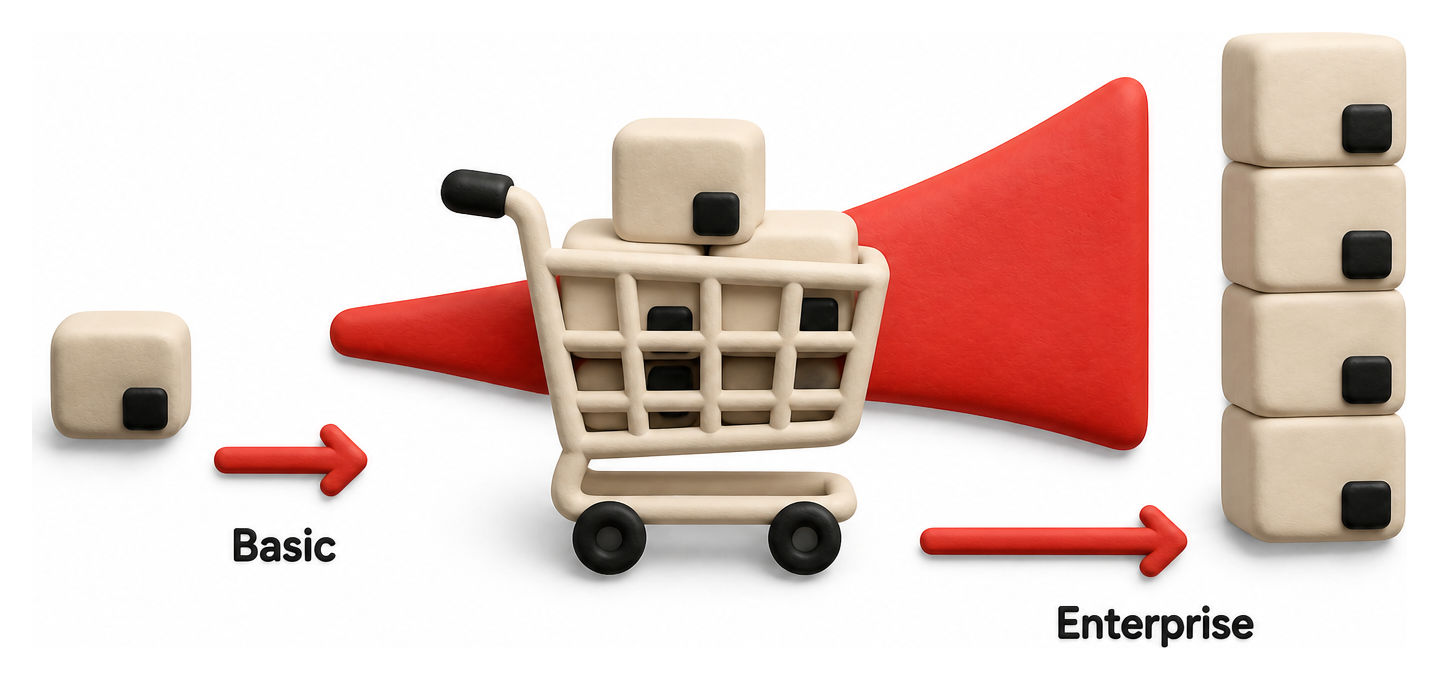
At the survey level, GoodFirms' 2026 industry survey of web development firms found that 74% of surveyed agencies price ecommerce builds between $5,000 and $50,000, and 86% report a typical ecommerce build timeline of 8 to 28 weeks [58]. The survey lists fintech/neobank and SaaS websites at a wider 16-to-40-week timeline range. At the platform level, Shopify-specific data from an ecommerce implementation partner breaks this range down further by store complexity: basic stores in 1 to 2 weeks, standard stores in 2 to 4 weeks, advanced stores with custom features in 4 to 8 weeks, and enterprise-grade Shopify Plus implementations in 3 to 6 months [7]. Network Solutions independently reports a similar range for basic ecommerce (Shopify or WooCommerce) at 1 to 3 weeks, extending to 1 to 3 months for advanced ecommerce with custom integrations [28].
At the largest end, catalog size alone does not establish a reliable duration; custom integrations, migration work, and data quality can extend a project beyond the standard ecommerce range. Enterprise ecommerce replatforming, which moves an existing catalog and order history from one commerce engine to another rather than building from a blank slate, can add timeline risk. Adobe’s migration guidance rates a "High" complexity migration from Adobe Commerce on Cloud Infrastructure or on-premises to Adobe Commerce as a Cloud Service at 12 to 24 months [8].
Two sources in this research diverge on how fast a simple ecommerce build can go, which is worth flagging honestly: a page-builder vendor's own agency blog reports having delivered "full e-commerce projects in just 2 weeks" [59], a figure at the extreme fast end of the 8-to-28-week range GoodFirms' broader survey reports as typical. Available data suggest this reflects an unusually simple, small-catalog store built by an experienced in-house team rather than a representative case; readers planning an ecommerce build should anchor expectations on the 8-to-28-week survey range rather than the two-week outlier.
Building a Realistic Website Project Timeline Template
A practical project timeline template translates the stage-by-stage estimates above into a planning document a team can actually use to sequence work and set client or stakeholder expectations.
Project-management platform Asana's own web design process template frames a typical mid-sized website redesign at roughly 16 to 22 weeks from discovery to launch [15]. Its listed activities are discovery (2 to 3 weeks), strategy and information architecture (1 to 2 weeks), wireframing (2 to 3 weeks), visual design (3 to 4 weeks), development (6 to 8 weeks), testing (2 weeks), and launch preparation (1 week). If treated as fully sequential, those activity ranges total 17 to 23 weeks; the 16-to-22-week figure should therefore be used as an overall planning range that assumes some overlap. The template is explicitly designed as "a step-by-step guide that takes a website project from initial planning through launch" [60], rather than a fixed formula, meaning teams are expected to compress or extend individual phases based on scope.
Templates of this kind commonly use one of two structures. A milestone-based timeline marks major checkpoints, such as design sign-off, development complete, and launch approval, rather than tracking every individual task; project-management vendor monday.com describes this format as one that "strip[s] away activity details to focus on major achievements" [61], making it well suited to executive or client-facing status reporting. A task-level Gantt or sprint-based timeline, by contrast, breaks each stage down into individual assignments and dependencies, which better suits the team actually executing the build. monday.com's own guidance notes that "over half of all projects now use hybrid methodologies," blending elements of Agile (iterative, sprint-based) and Waterfall (sequential, phase-gated) planning rather than committing to either exclusively [62], a pattern that matches how the website-specific stage breakdown in Table 2 is typically executed in practice: sequential at the macro level (discovery before design before development), but iterative within each stage.
For teams building their own template, the stage durations established earlier in this report, discovery (1 to 4 weeks), information architecture (1 to 3 weeks), visual design (2 to 4 weeks), development (4 to 10 weeks), testing (2 days to 2 weeks), and launch buffer (roughly 1 week), provide a reusable starting scaffold that can be resized against the complexity tiers in Table 1. A development agency's own guidance underscores why front-loading planning quality matters disproportionately: it cites the long-established software engineering finding that "late-stage changes cost up to 100 times more than the same changes addressed early" in a project (Source: butterfly.com.au), reinforcing why a well-sequenced template, not just a longer timeline, is the more reliable lever for hitting a launch date. A separate development agency's guidance for enterprise-scale WordPress builds reinforces the same point from the opposite direction, noting that inadequate upfront planning is a leading cause of projects sliding from an eight-to-twelve-week estimate toward the six-to-twelve-month range reserved for genuinely enterprise-scale deployments [25].
Data Analysis and Evidence
This section consolidates the quantitative survey and market data underlying the timeline estimates discussed above.
Industry survey data on cost and timeline. GoodFirms' 2026 survey of more than 300 web development firms across 31 countries is the most directly relevant timeline-specific dataset located for this report, but it is a survey of provider estimates rather than a representative sample of completed website projects. For basic websites or minimum viable products (MVPs), 71% of surveyed firms selected 2 to 4 weeks [63]; for mid-sized sites, half selected 4 to 8 weeks, while 32% selected 8 to 16 weeks [4]. The Platform and Complexity sections also present vendor-specific guidance and case studies (Adobe, BigCommerce, WordPress VIP, and Sitecore). Those sources illustrate timelines for particular products and implementations; they do not independently validate a single enterprise-wide range. An earlier GoodFirms survey of over 200 web design agencies and freelancers found an average professional web design turnaround of roughly 2 months, with 80.7% of firms citing a baseline of about one month, extending to 2.5 to 3 months for more complex builds [5], and an average quoted cost of about $3,200 for a basic-feature website [64].
Small business adoption and platform choice. Clutch's 2025 survey of 406 U.S. small business owners, fielded via SurveyMonkey on August 5, 2025, found that 83% of small businesses now have a website, up sharply from 64% in 2018 [65]. Of the businesses that built a site, 41% used no-code builders such as Wix or Squarespace, 34% used low-code platforms such as WordPress or Shopify, and 12% used custom full-code development [66].
Platform market share. W3Techs, which tracks CMS usage across a large sample of the web on a continuously updated basis, reports as of July 31, 2026 that WordPress holds a 41.2% share of all websites, with Shopify second at 5.3% and Wix third at 4.3% of all sites [10]. BuiltWith's ecommerce-technology tracker, focused specifically on the top one million sites by traffic rank, separately recorded 64,225 Shopify detections as of July 27, 2026, the largest single ecommerce platform in that traffic-weighted sample [11]. These figures describe platform usage, not a demonstrated causal relationship with build duration. When choosing a platform, teams can separately assess the availability of suitable themes, plugins, and implementation talent alongside the project’s specific integration and customization requirements.
Cost as a timeline proxy. Because agencies typically price by scope and hours rather than by calendar time alone, cost data offers a useful cross-check on timeline estimates. Forbes Advisor's 2026 guide estimates a DIY small-business site at $0 to $450, while a professionally designed site "generally starts around $1,500" [67], consistent with the lower end of GoodFirms' basic-site cost band from its agency survey. A second data point corroborates this from the enterprise side: BigCommerce's launch-services page, discussed earlier, positions its four-month average enterprise launch specifically as a service designed to compress a timeline that would otherwise run longer without dedicated implementation support [9], a reminder that the "build" timeline discussed throughout this report is heavily influenced by how much dedicated implementation support a project has, not only its raw scope.
Taken together, the data supports a more qualified conclusion: a 4-to-8-week interval was the most-selected GoodFirms estimate for mid-sized sites, while actual professional timelines vary with scope, platform, team capacity, and content readiness. The wide tails—from hours for template-based single pages to six months or more for highly customized or enterprise work—reflect those factors.
the number one reason website projects stall is a lack of prepared content
Case Studies and Real-World Examples
The following are named, real-world website or ecommerce projects with a publicly disclosed build or migration timeline, drawn from vendor case studies.
J.Lindeberg: Ecommerce Replatform in 16 Weeks
Swedish fashion and sportswear brand J.Lindeberg replatformed its ecommerce site from Salesforce Commerce Cloud to Shopify Plus, working with agency Grebban, completing the migration in 16 weeks [13]. The compressed timeline was driven by a hard external deadline: the ecommerce migration needed to complete alongside a concurrent enterprise resource planning (ERP) system launch, and the brand states the entire effort "needed to be done in under four months" [68]. This case documents one Shopify Plus ecommerce replatform completed in 16 weeks under a hard deadline. It should be treated as a case-specific result, not as a comparison with Adobe’s product-specific Adobe Commerce migration estimate or as a general enterprise benchmark.
Le Petit Ballon: Five New Markets in Two Months
French wine subscription brand Le Petit Ballon launched five new international markets on Shopify in two months, running four languages, with a lean three-person team consisting of one technical resource and two marketers [69]. This case demonstrates that multi-market ecommerce expansion, often assumed to require a large team, can be executed on an accelerated timeline when the underlying platform and product catalog are already established and only localization, not core commerce logic, is being built.
Backbase: Full Corporate Site Migration in 8 Weeks
Backbase, a Netherlands-based banking software company, migrated its entire corporate website to Webflow in eight weeks, working with partner agency Cut the Code, under a deadline tied to an AI-native brand relaunch [70]. This case is notable because it involved a full platform migration (moving an entire existing site to a new CMS), not a greenfield build, at a pace close to the low end of what the WordPress VIP migration guide (5 to 12 weeks for a same-platform migration) reports as typical for a considerably less involved cross-CMS move.
Grubhub: Seven-Week Campaign Microsite
Food-delivery company Grubhub, working with Webflow agency partner Wondersauce, built its "2022 Delivered" year-end campaign site on Webflow Enterprise in seven weeks [71]. As a marketing campaign microsite rather than a core commerce or corporate site, this project sits within the "mid-size site" timeline band from Table 1, despite carrying premium production values.
Verifone: 32-Locale Page Rebuild in 10 Days
Payments technology company Verifone, working with partner agency BX Studio, rebuilt and delivered five high-impact pages across 32 global locales in 10 days [12]. This case demonstrates that a narrow-scope, high-page-count-per-locale project (five templates multiplied across many markets) can move far faster than a comparable page count spread across unique designs, because the underlying design system is reused rather than rebuilt per locale.
Arkose Labs: Contract to Live Site in 3.5 Weeks
Cybersecurity firm Arkose Labs went from signing its Webflow implementation contract to a fully live new website in three and a half weeks, replacing a website that had run on WordPress for roughly a decade [72]. This is among the fastest fully custom (non-template) professional builds documented in this report's case-study sample, and stands as a useful reference point for organizations replacing a long-standing legacy site under time pressure.
Sitecore.com: Enterprise CMS Self-Migration in Approximately Four Months
Enterprise CMS vendor Sitecore rebuilt, migrated, and relaunched its own corporate site, sitecore.com, onto its XM Cloud platform in approximately four months, a timeline the company itself describes as fast for a site of that complexity [30]. Because Sitecore was migrating its own site onto its own platform, with direct engineering access to the vendor's tooling, this case may not represent a typical customer engagement. It should not be compared directly with Adobe’s 12-to-24-month estimate, which applies to high-complexity migrations from Adobe Commerce on Cloud Infrastructure or on-premises to Adobe Commerce as a Cloud Service.
POLIMI Graduate School of Management: Full Digital Transformation in Six Months
POLIMI Graduate School of Management, an Italian business school, completed a full digital transformation, including its website, ecommerce functionality, and personalization capability, using Sitecore, within six months [14]. Unlike the Sitecore.com case above, this was a third-party customer engagement, making it a more representative benchmark for organizations considering a comparable multi-capability enterprise CMS rollout.
Considered together, these eight cases span 10 days to 6 months, corroborating the platform and complexity tables presented earlier: narrow-scope, design-system-reuse projects (Verifone) and time-boxed campaign microsites (Grubhub) complete in one to two weeks per equivalent scope-unit, while full-catalog ecommerce replatforms (J.Lindeberg) and multi-capability enterprise transformations (POLIMI) require three to six months even when executed by experienced implementation partners.
Rebuilt five pages across 32 global locales with Webflow partner BX Studio.
Went from signing its Webflow contract to a fully live new website, replacing a decade-old WordPress site.
Launched five new international markets on Shopify with a lean three-person team.
Built its year-end campaign microsite on Webflow Enterprise with partner Wondersauce.
Migrated its entire corporate website to Webflow under a brand relaunch deadline.
Replatformed its ecommerce site from Salesforce Commerce Cloud to Shopify Plus under a hard deadline.
Rebuilt, migrated, and relaunched its own corporate site onto its XM Cloud platform.
Completed a full digital transformation including website, ecommerce, and personalization using Sitecore.
Implications and Future Directions
Several structural trends are compressing the fast end of the website-build timeline distribution while the slow end, enterprise and highly custom builds, remains comparatively stable.
Template-based DIY workflows can reduce the build time for a simple site to hours when content and SEO preparation are complete. Webflow’s three-hour example demonstrates that template workflow; it does not establish an AI-generation timeline or a general trend for professional-quality websites. The sources in this report do not establish that AI tooling has shortened the 12-to-24-month estimate Adobe gives for high-complexity migrations to Adobe Commerce as a Cloud Service. That estimate is specific to Adobe’s assessed migration scenario, so it should not be generalized to enterprise replatforming overall.
A second implication concerns where organizations should focus planning effort. Because late content is a recurring delay risk in agency guidance (Source: bsmart.agency), organizations that want to compress their realistic timeline can prioritize finalizing copy, product data, and imagery before a build begins, rather than assuming a faster platform or larger team will absorb the delay. This finding carries a direct budget implication as well: since custom back-end development, not content, is separately identified as the leading cost-overrun driver in agency surveys, scope discipline around integrations functions as a second, independent lever for controlling both cost and schedule.
A third implication concerns accessibility. As WCAG conformance becomes a more common contractual or regulatory requirement, particularly for public-sector, financial-services, and healthcare websites, the timeline data in this report suggests organizations should budget for it during initial design rather than as a post-launch remediation project, since retrofitting is estimated at roughly double the time of building accessibly from the outset [54].
Finally, the case-study sample above suggests that established platform workflows can help explain the fastest documented timelines. Verifone's 10-day, 32-locale rebuild was executed with Webflow partner BX Studio, while Arkose Labs' 3.5-week relaunch was led by its internal marketing team using Webflow and Claude [12] [72]. Organizations facing an aggressive deadline may find that implementation approach and platform fit, alongside team capacity, can help compress a timeline.
Frequently Asked Questions (FAQs)
How long does website design take, specifically, as distinct from full development? The design phase alone, covering wireframes, visual design, and a style guide, typically takes 2 to 4 weeks for a standard business site, based on multiple independent agency estimates [35], though this can extend to 5 to 7 weeks for a mid-sized redesign per Asana's project template [15].
What is the average time to build a website overall? Survey data from GoodFirms indicates the most commonly cited timeline for a mid-sized professional website is 4 to 8 weeks, per half of the 300-plus firms surveyed, while an earlier GoodFirms survey of agencies and freelancers found an average professional turnaround of roughly 2 months across all site types [5].
How long should a web design project take before a client should be concerned about delay? There is no universal threshold, but the data in this report suggests a standard business site (5 to 15 pages) exceeding roughly 12 weeks, well beyond the 4-to-8-week range most sources cite for that scope, warrants asking whether unready content, scope creep, or an unusually large approval chain is the cause. Available data indicate that engaged, responsive stakeholders complete projects 30 to 40% faster than those with delayed feedback cycles, making client responsiveness one of the more reliable early indicators of whether a project will land on schedule [48].
What are the main factors that affect website development time? Common factors include content readiness, custom back-end development and integrations, the number of stakeholders and revision rounds, platform and team choice (DIY versus freelancer versus agency versus enterprise implementation partner), and accessibility or compliance requirements. Each is discussed in detail in the "Factors" section above.
How long does it take to build an ecommerce website specifically? Platform-specific data shows basic Shopify or WooCommerce stores completing in 1 to 3 weeks and advanced, integration-heavy stores taking 1 to 3 months or longer [28], consistent with the broader 8-to-28-week survey range discussed in the Ecommerce section above.
Can a website really be built in a single day? Yes, for narrow scopes. Webflow demonstrates a template-based build in three hours or less [3], and one agency reports having delivered a full static website in four days for a client with clear requirements and ready content [59], but these are the fast tail of the distribution, not a representative baseline for a business site with custom design and multiple stakeholders.
Conclusion
There is no single correct answer to how long a website takes to build. A practical planning framework starts with the complexity tier (simple brochure, mid-size, ecommerce, or enterprise custom build), then adjusts directional vendor and agency estimates for platform, team structure, and content readiness. In GoodFirms' 2026 survey of 300-plus web development firms across 31 countries, 4 to 8 weeks was the most-selected interval for mid-sized websites (50% of respondents); its table lists 8 to 28 weeks as the most-selected interval for enterprise-level websites (32.2% of respondents) and ecommerce websites (86% of respondents). These are respondent-reported estimates, not universal benchmarks or observed project outcomes ( GoodFirms. Highly customized or enterprise builds can extend beyond those survey ranges depending on migration complexity.
A practical takeaway from the agency and vendor guidance is that content readiness is a controllable source of schedule risk alongside platform choice, design ambition, scope, and approvals. Finalizing copy, imagery, and (for ecommerce) product data before a build begins can reduce one potential source of delay. The named case studies in this report, from a 10-day, 32-locale page rebuild to a six-month digital transformation, demonstrate that scope and technical requirements can materially affect delivery. Adobe separately estimates 12 to 24 months for high-complexity migrations from Adobe Commerce on Cloud Infrastructure or on-premises to Adobe Commerce as a Cloud Service.
External Sources (72)
About
Tapflare
Tapflare in a nutshell Tapflare is a subscription-based “scale-as-a-service” platform that hands companies an on-demand creative and web team for a flat monthly fee that starts at $649. Instead of juggling freelancers or hiring in-house staff, subscribers are paired with a dedicated Tapflare project manager (PM) who orchestrates a bench of senior-level graphic designers and front-end developers on the client’s behalf. The result is agency-grade output with same-day turnaround on most tasks, delivered through a single, streamlined portal.
How the service works
- Submit a request. Clients describe the task—anything from a logo refresh to a full site rebuild—directly inside Tapflare’s web portal. Built-in AI assists with creative briefs to speed up kickoff.
- PM triage. The dedicated PM assigns a specialist (e.g., a motion-graphics designer or React developer) who’s already vetted for senior-level expertise.
- Production. Designer or developer logs up to two or four hours of focused work per business day, depending on the plan level, often shipping same-day drafts.
- Internal QA. The PM reviews the deliverable for quality and brand consistency before the client ever sees it.
- Delivery & iteration. Finished assets (including source files and dev hand-off packages) arrive via the portal. Unlimited revisions are included—projects queue one at a time, so edits never eat into another ticket’s time.
What Tapflare can create
- Graphic design: brand identities, presentation decks, social media and ad creatives, infographics, packaging, custom illustration, motion graphics, and more.
- Web & app front-end: converting Figma mock-ups to no-code builders, HTML/CSS, or fully custom code; landing pages and marketing sites; plugin and low-code integrations.
- AI-accelerated assets (Premium tier): self-serve brand-trained image generation, copywriting via advanced LLMs, and developer tools like Cursor Pro for faster commits.
The Tapflare portal Beyond ticket submission, the portal lets teams:
- Manage multiple brands under one login, ideal for agencies or holding companies.
- Chat in-thread with the PM or approve work from email notifications.
- Add unlimited collaborators at no extra cost.
A live status dashboard and 24/7 client support keep stakeholders in the loop, while a 15-day money-back guarantee removes onboarding risk.
Pricing & plan ladder
| Plan | Monthly rate | Daily hands-on time | Inclusions |
|---|---|---|---|
| Lite | $649 | 2 hrs design | Full graphic-design catalog |
| Pro | $899 | 2 hrs design + dev | Adds web development capacity |
| Premium | $1,499 | 4 hrs design + dev | Doubles output and unlocks Tapflare AI suite |
All tiers include:
- Senior-level specialists under one roof
- Dedicated PM & unlimited revisions
- Same-day or next-day average turnaround (0–2 days on Premium)
- Unlimited brand workspaces and users
- 24/7 support and cancel-any-time policy with a 15-day full-refund window.
What sets Tapflare apart
Fully managed, not self-serve. Many flat-rate design subscriptions expect the customer to coordinate with designers directly. Tapflare inserts a seasoned PM layer so clients spend minutes, not hours, shepherding projects.
Specialists over generalists. Fewer than 0.1 % of applicants make Tapflare’s roster; most pros boast a decade of niche experience in UI/UX, animation, branding, or front-end frameworks.
Transparent output. Instead of vague “one request at a time,” hours are concrete: 2 or 4 per business day, making capacity predictable and scalable by simply adding subscriptions.
Ethical outsourcing. Designers, developers, and PMs are full-time employees paid fair wages, yielding <1 % staff turnover and consistent quality over time.
AI-enhanced efficiency. Tapflare Premium layers proprietary AI on top of human talent—brand-specific image & copy generation plus dev acceleration tools—without replacing the senior designers behind each deliverable.
Ideal use cases
- SaaS & tech startups launching or iterating on product sites and dashboards.
- Agencies needing white-label overflow capacity without new headcount.
- E-commerce brands looking for fresh ad creative and conversion-focused landing pages.
- Marketing teams that want motion graphics, presentations, and social content at scale. Tapflare already supports 150 + growth-minded companies including Proqio, Cirra AI, VBO Tickets, and Houseblend, each citing significant speed-to-launch and cost-savings wins.
The bottom line Tapflare marries the reliability of an in-house creative department with the elasticity of SaaS pricing. For a predictable monthly fee, subscribers tap into senior specialists, project-managed workflows, and generative-AI accelerants that together produce agency-quality design and front-end code in hours—not weeks—without hidden costs or long-term contracts. Whether you need a single brand reboot or ongoing multi-channel creative, Tapflare’s flat-rate model keeps budgets flat while letting creative ambitions flare.
Disclaimer
This document is provided for informational purposes only. No representations or warranties are made regarding the accuracy, completeness, or reliability of its contents. Any use of this information is at your own risk. Tapflare shall not be liable for any damages arising from the use of this document. This content may include material generated with assistance from artificial intelligence tools, which may contain errors or inaccuracies. Readers should verify critical information independently. All product names, trademarks, and registered trademarks mentioned are property of their respective owners and are used for identification purposes only. Use of these names does not imply endorsement. This document does not constitute professional or legal advice. For specific guidance related to your needs, please consult qualified professionals.